
Beyond Clean-Ups: What It Would Take to Restore Our Ecosystems — The Nairobi River Case Study
Why removing physical trash is only a first step, and what systemic structural governance is needed to revive Kenya's most vital urban waterway.

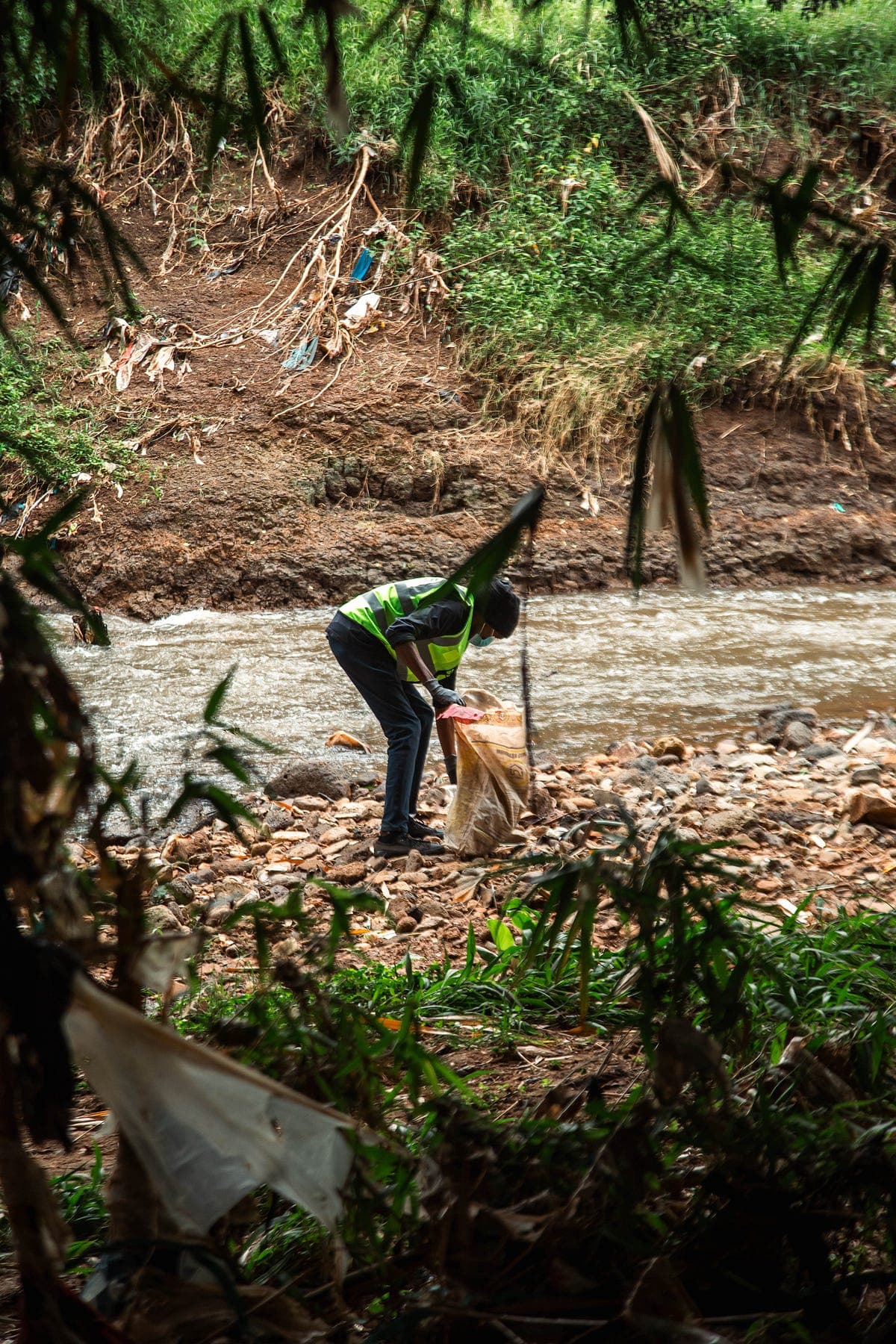
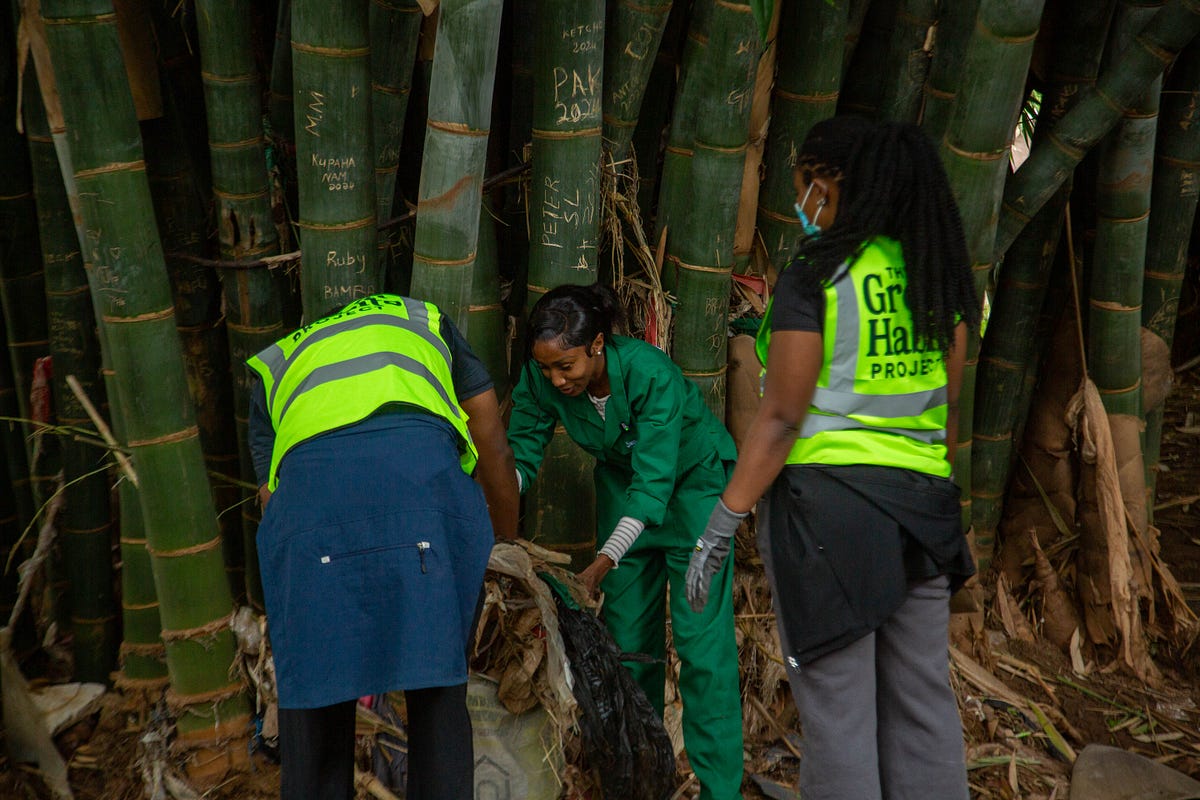
Photo: me cleaning the Nairobi River at John Michuki Memorial Park
One chilly Saturday morning, despite light showers, a group of eco-warriors—myself included—braved the cold for a long-awaited Nairobi River clean-up exercise at John Michuki Memorial Park, situated in the heart of Nairobi. The park is one of the city's few remaining public green spaces, with scattered trees and patches of vegetation providing a welcome escape from the surrounding concrete landscape. Flowing quietly through the park is the Nairobi River as it continues its journey across the city.
Although none of us knew each other beforehand, we were united by one objective: to help clean one of Kenya's most polluted rivers. It quickly became apparent that the task before us was enormous. By the end of the exercise, we had barely scratched the surface. The amount of waste accumulated along the riverbanks far exceeded what a handful of volunteers could remove in a single morning. Nevertheless, we filled several bags with waste, sorted recyclable materials, and left the river slightly cleaner than we had found it.
The chilly weather proved ideal for the clean-up as we scoured the riverbed for plastic bottles, glass, discarded textiles, and countless other forms of waste. Interestingly, relatively little floating waste remained in the water itself. Much of it had already been washed downstream by the recent long rains and deposited along the riverbanks. However, the river remained brown due to heavy siltation, while patches of froth on the water's surface suggested the presence of detergents and other chemical pollutants. The odour was far less offensive than before the rainy season, when visitors are often greeted by a pungent smell. Bamboo has been planted along sections of the riverbanks as part of restoration efforts, but much of the riverbed remains muddy and rocky. Wildlife was scarce. Aside from a few birds and insects, there was little evidence of the rich ecosystem that once existed.
“As we cleaned, one thought continually crossed my mind: this river was once clean enough for nearby communities to drink from. How did we arrive at a point where the Nairobi River has become one of the country's most degraded waterways?”
— Michael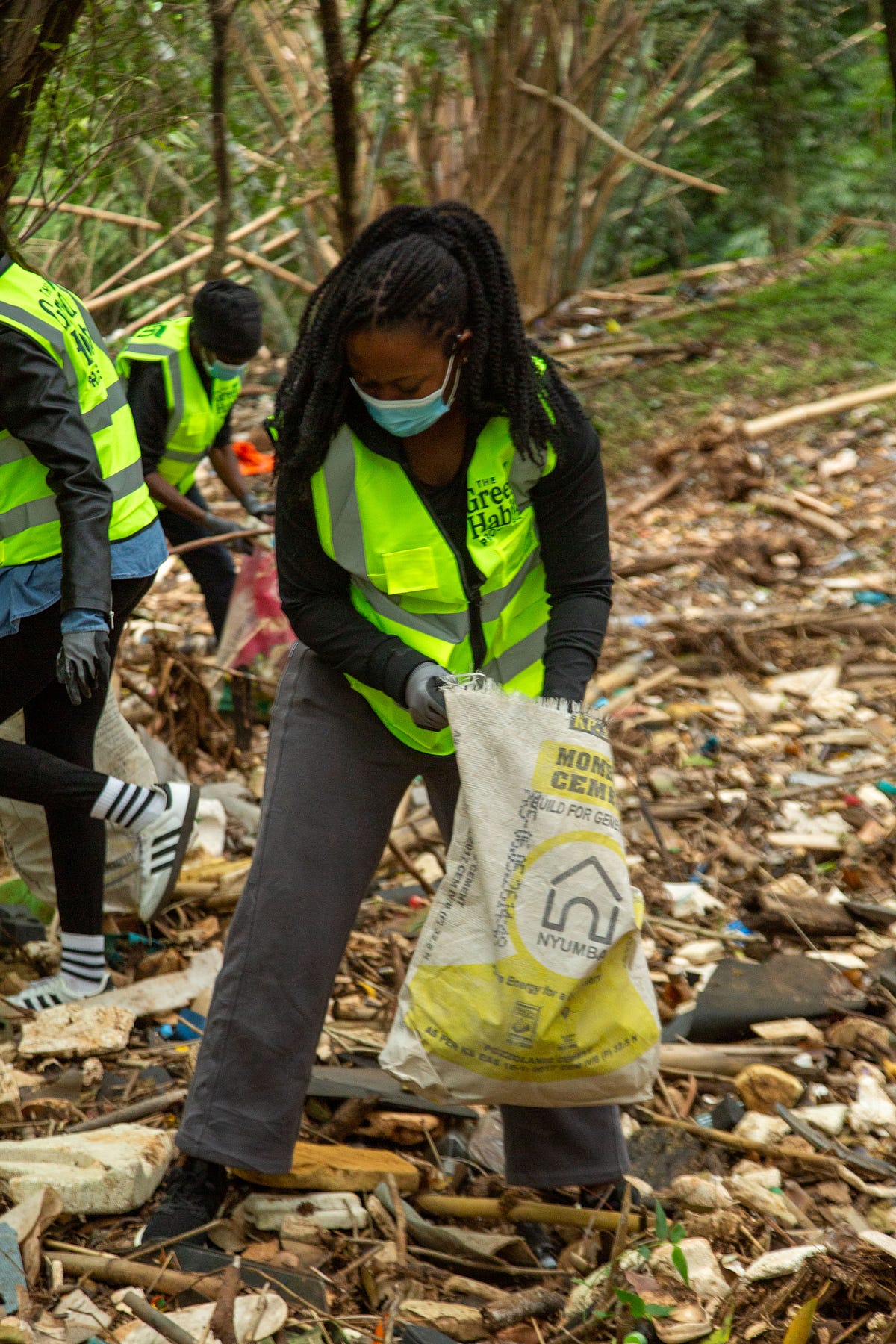
The History of the Nairobi River: From “Cool Waters” to Open Drainage
The history of the Nairobi River offers part of the answer. The river originates from Ondiri Swamp, a rare high-altitude wetland west of Nairobi, before flowing east through the city. It forms the backbone of the Nairobi River Basin, which consists of several tributaries—including the Ngong and Mathare Rivers—that converge east of Nairobi before joining the Athi River. The Athi River eventually flows southeast into the Indian Ocean, passing through Tsavo East National Park, where it supports wildlife and local communities along its course.
Long before Nairobi was established as a colonial railway depot in 1899, these rivers sustained farming communities and wildlife. They provided clean water for domestic use, irrigation, fishing, and livestock. In fact, the name “Nairobi” originates from the Maasai phrase Enkare Nairobi, meaning “cool waters,” a reminder of the abundant rivers and wetlands that once defined the landscape.
During the colonial period, however, Nairobi grew rapidly into an administrative and industrial centre. Industries, railway yards, residential estates, and later informal settlements expanded along the riverbanks. For decades, untreated industrial effluent, sewage, and solid waste were discharged directly into the river. Population growth consistently outpaced investments in sewerage and waste management infrastructure, gradually transforming the river from a vital natural resource into what has become, for much of the city, an open drainage channel.
Our Clean-Up Reflected This Reality
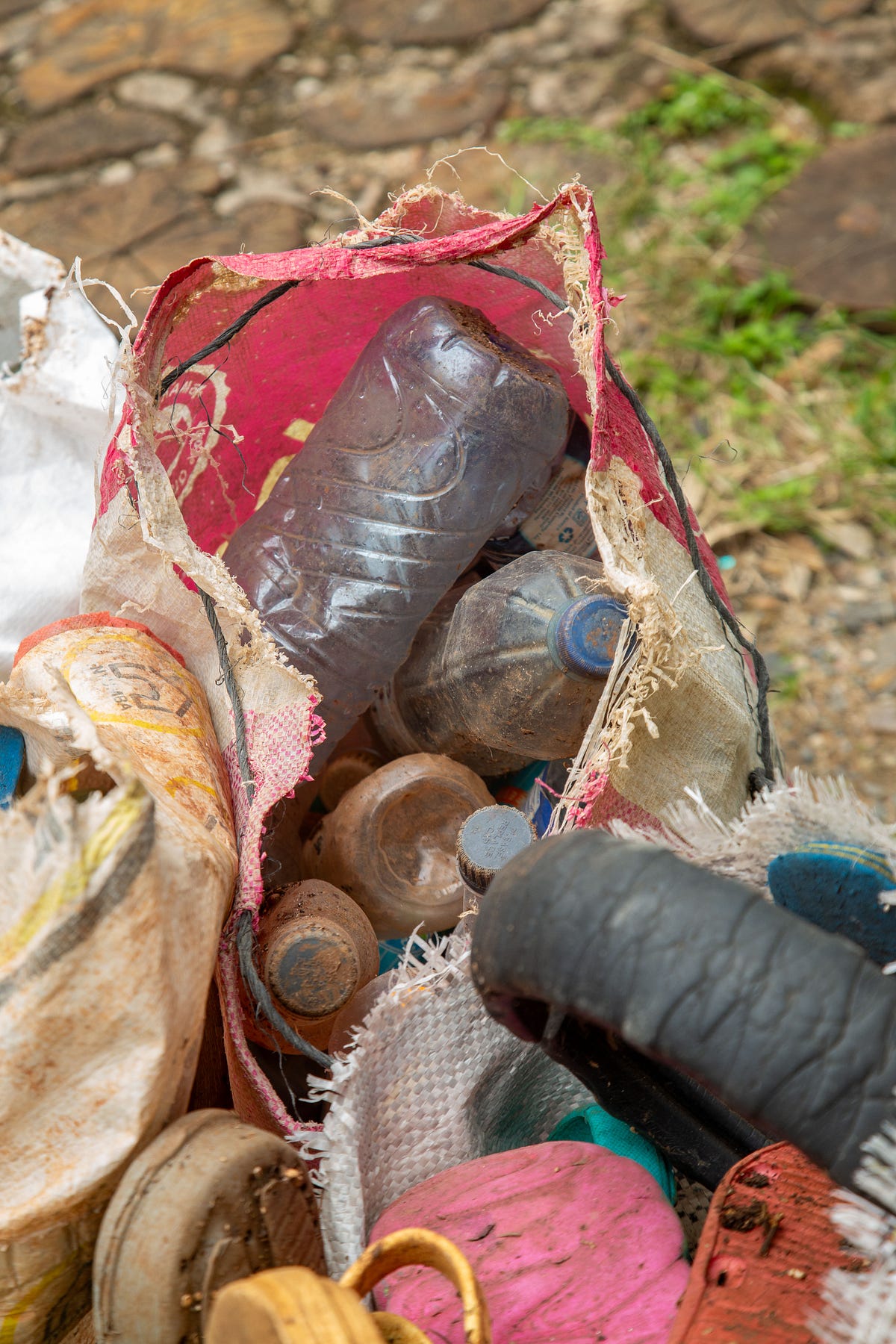
Our clean-up reflected this history. Plastics, glass bottles, and discarded textiles made up the majority of the waste we collected, suggesting that improper household waste disposal remains one of the largest contributors to river pollution. Informal settlements situated along sections of the river also contribute significantly, largely because many lack reliable waste collection services and adequate sanitation infrastructure. The froth and lingering signs of pollution indicated that untreated sewage and industrial discharge continue to enter the river, while severe soil erosion has increased siltation, giving the water its characteristic brown appearance.
Despite its condition today, numerous efforts have been made over the years to restore the Nairobi River. Successive governments have launched programmes focusing on pollution control, sewerage improvements, waste management, riparian restoration, afforestation, and public awareness. More recently, the Nairobi Rivers Commission has coordinated restoration efforts involving riverbank clean-ups, the removal or relocation of developments built on protected riparian land, expansion of sewerage infrastructure, and the rehabilitation of wetlands such as Ondiri Swamp.
Civil society organizations, universities, community groups, and volunteers continue to organize regular clean-up exercises, while international partners—including the United Nations Environment Programme (UNEP), whose global headquarters are located in Nairobi—have supported these efforts through technical expertise, environmental monitoring, research, and policy development.
The Implementation Gap: Comprehensive Law vs. Practical Enforcement
Despite decades of programmes, policy interventions, and volunteer-led clean-up efforts, the river remains heavily polluted.
Kenya possesses comprehensive environmental legislation. Improper waste disposal is illegal, industries are required to treat effluent before discharge, and riparian areas are legally protected. Yet pollution persists. This suggests a disconnect between the law on paper and its implementation. Weak enforcement, corruption, inadequate infrastructure, limited institutional capacity, and inconsistent accountability have allowed environmental violations to continue. In many cases, illegal dumping remains cheaper than proper waste disposal, while enforcement agencies often lack sufficient resources or oversight to ensure compliance.
The most important question is not simply how we restore our environment, but how we build a culture of accountability. How do we ensure that environmental laws are consistently enforced? How do we empower citizens to hold public institutions accountable?
Strengthening Local Civil Society Through International Collaboration
In Kenya, many local civil society organizations work tirelessly to protect the environment. However, they often operate within a challenging governance environment characterized by limited funding, political interference, bureaucratic obstacles, and, at times, intimidation. These governance risks can constrain their ability to sustain long-term advocacy and hold institutions accountable.
One practical strategy is for local civil society organizations to strengthen partnerships with international organizations rather than working in isolation. Organizations such as UNEP, UN-Habitat, the World Bank, and other multilateral institutions possess technical expertise, independent monitoring systems, financing, and global networks that complement local efforts. Their international visibility can also reduce governance risks by increasing transparency and encouraging governments to uphold their environmental commitments. Rather than replacing local organizations, these partnerships can strengthen their capacity, provide greater institutional protection, and amplify citizens' voices.
What Global Precedents Teach Us
Successful river restoration elsewhere demonstrates the value of institutional synergy and citizen empowerment:
- Seoul, South Korea (Cheonggyecheon Stream): Restoration was made possible not only through massive government infrastructure investment, but also through rigorous public consultation, academic partnerships, and continuous citizen monitoring.
- Singapore (Singapore River): Cleaning the river required decades of coordinated action involving strict law enforcement, relocation of polluting activities, modern sewerage grids, and sustained public education that fostered a culture of environmental responsibility.
- London, United Kingdom (River Thames): Once declared biologically dead, the Thames recovered through strong water regulation, citizen science, volunteer conservation trusts, and consistent municipal wastewater treatment upgrades.
- New York, USA (Hudson River): Benefited from grassroots watchdog organizations like Riverkeeper, whose scientific water sampling, legal litigation against polluters, and public advocacy transformed environmental defense into a shared civic duty.
These examples demonstrate that environmental restoration succeeds when citizens are supported by strong institutions, transparent governance, and long-term partnerships. For Nairobi, international collaboration should therefore be viewed not as a substitute for local action, but as a means of reinforcing it where governance challenges continue to hinder progress.
Building a Global Learning Network for Local Rivers
For better governance outcomes—both within local civil society organizations and across the country's leadership—partnerships with international organizations should be structured in a manner that enhances collaboration. For example, local civil society organizations could become affiliates, national chapters, or implementation partners of international organizations, fostering stronger institutional safeguards through the sharing of best practices, joint capacity building, professional exchange programmes, fellowships, and participation in global networks that promote ethical leadership and accountability.
By transforming local civil society organizations into members of a global learning network, environmental initiatives such as river restoration become more than a series of clean-up exercises. They become continuous exchanges of knowledge, innovation, accountability, and leadership. Such a model recognizes that while every river is local, the challenges of pollution, urbanization, and governance are global—and that the strongest solutions are those developed collaboratively.
Collective Action for Enduring Waters
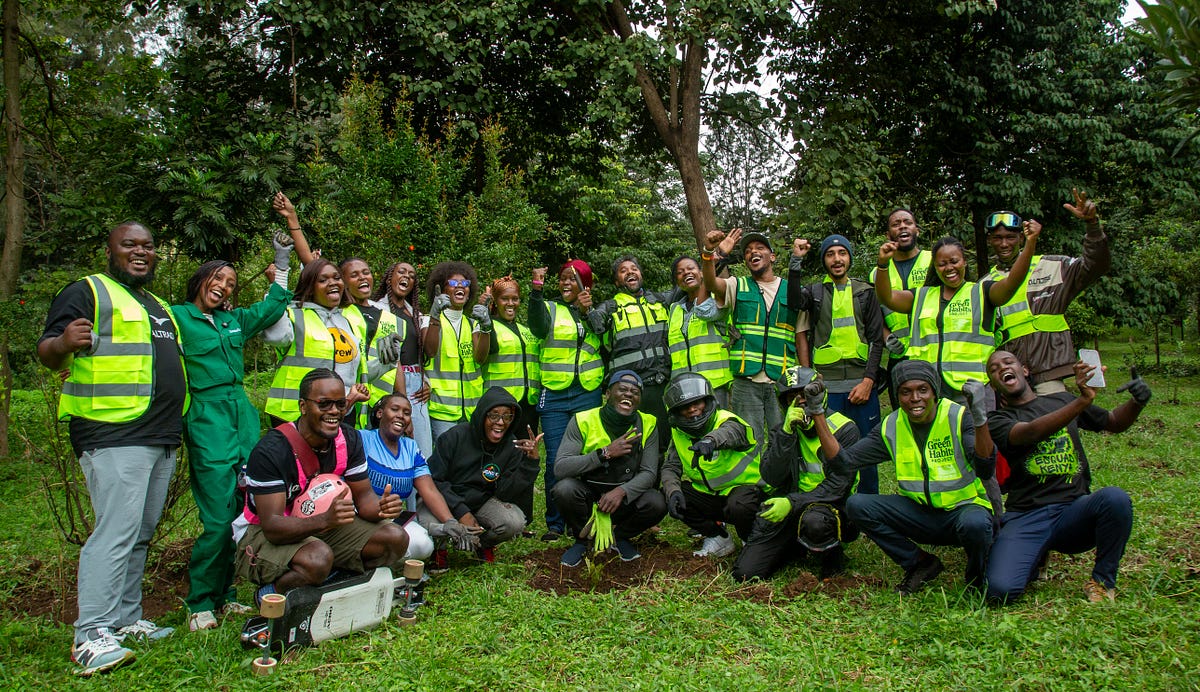
As our volunteer group packed up after the clean-up, it was obvious that we had removed only a tiny fraction of the pollution. Yet the experience reinforced an important lesson. Restoring the Nairobi River will not be accomplished in a single morning or by one organization alone. It will require years of sustained cooperation among citizens, government, civil society, businesses, scientists, and international partners. The Nairobi River once sustained life. With commitment, accountability, and collective action, there is every reason to believe it can do so again.
This article was originally written and authored by Michael (Mikedougy) following volunteer river clean-up fieldwork with the Green Habits community at John Michuki Memorial Park.
Michael (Mikedougy)
Guest Contributor & Environmental Advocate at Green Habits Project. Committed to field-tested regenerative practices, community forest restoration, and circular living.
5 Sustainable Habits You Can Start Today
Sustainability starts with everyday choices. Here are five simple habits that can help you save money, reduce waste, and make greener living feel more achievable.
Have a local environmental habit or cleanup story to share?
We regularly amplify citizen scientists, balcony composters, student nurseries, and neighborhood cleanup crews across Kenya. If your community is getting its hands in the soil, we want to publish your field notes.